
The Currency of Colour
- Home
- Blog
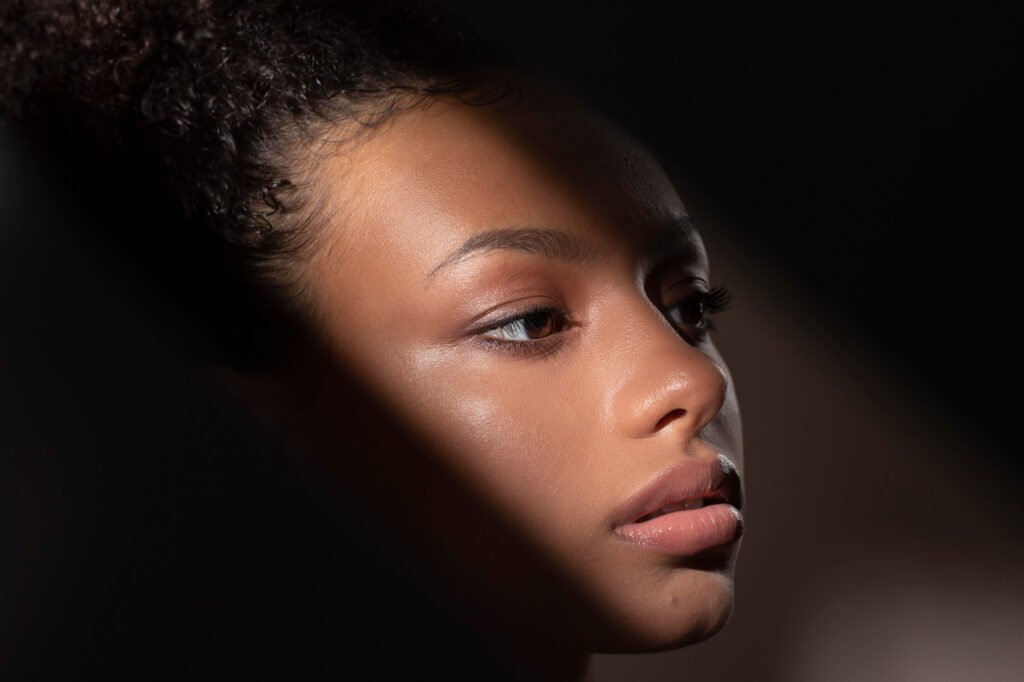
By Omolola Olakunri
She was not beautiful.
Not in the predictable way beauty is usually understood.
Her face did not possess the symmetry of carved marble, nor did her features arrive with the drama that stops men in their tracks.
And yet, when she entered the room, the air shifted.
Conversation loosened into murmurs.
Eyes lifted instinctively.
The room leaned toward her as flowers bend unconsciously toward light.
It was the skin.
That impossible hue.
It moved upon her body like molten amber poured by careful gods. Smooth. Luminous. Untouched.
Her complexion held the deep, earthy seduction of terracotta after rain, rich as wet clay beneath evening sunlight.
It did not merely sit upon her body; it adorned her like silk draped over sacred sculpture.
There are some skins that do not ask to be seen.
They command it.
And hers was one of them.
Society treated her as though the gods had kissed her generously at birth. Handed her a soft power wrapped in melanin and light. A privilege so effortless she wore it like breathing.
People noticed.
They always did.
Before she spoke.
Before she smiled.
Before intelligence, character, or intention could announce themselves.
The hue had already arrived ahead of her.
And life, in return, became gentler.
Doors softened at her approach.
Eyes lingered longer than necessary.
Men offered kindness with suspicious eagerness.
Women measured her carefully, disguising fascination as a compliment.
She learned early that beauty is one thing, but desirability is another religion entirely.
And society had long ago chosen its preferred saints.
For many cultures, fair skin has carried an ancient mysticism. An allure polished by history itself. Colonial longing, cinema, advertising, and class performance. Generation after generation whispering the same seductive gospel: lighter is softer, lighter is finer,
lighter deserves tenderness.
Certain hues became associated with a life untouched by labour. A complexion sheltered from the harshness of the sun and suffering. Skin that suggested luxury before a single word was spoken.
And the world responded accordingly.
The lighter-skinned woman became spectacle and symbol at once.
More visible, more pursued, more forgiven. The face on billboards. The woman seated beside wealth. The muse. The obsession.
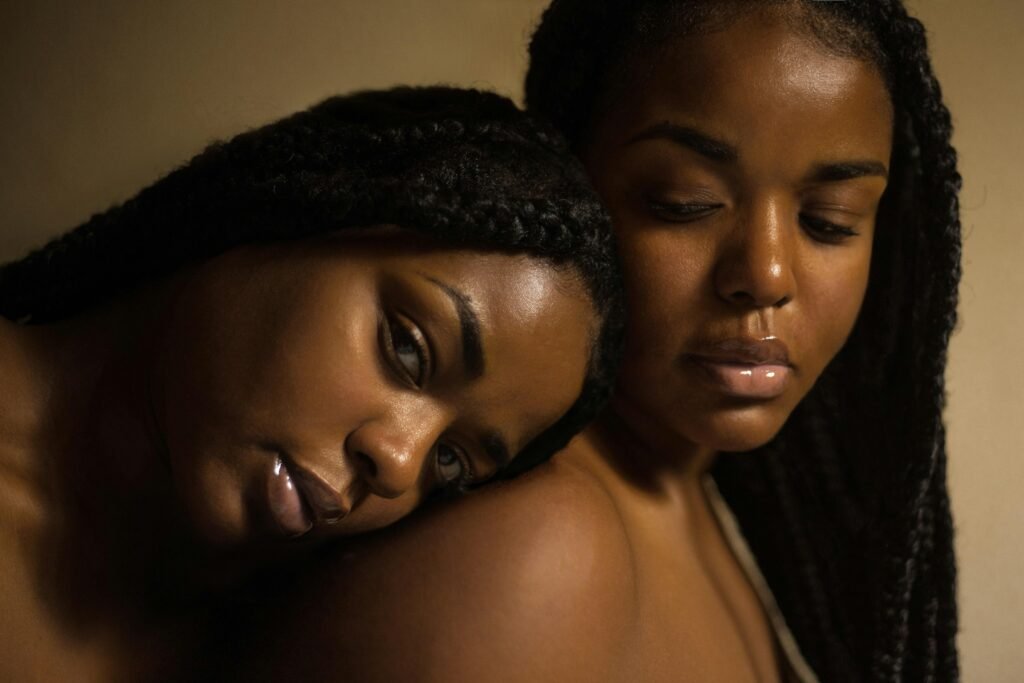
Across Southern Nigeria, entire communities became quietly famous for these radiant shades, the Ibibio, Efik, Itsekiri, parts of Iboland, where skin sometimes glows with an almost mythical brilliance.
Yet beauty has never belonged to one tribe alone. Every land births women whose complexions carry their own kind of poetry.
However, where admiration gathers, imitation follows.
And so bathrooms became laboratories of longing.
Creams. Soaps. Serums. Injections.
Women standing before mirrors, bargaining gently with inheritance.
Trying to lighten memory.
Trying to bleach themselves closer to acceptance.
Because colour, though accidental, became currency.
A social perfume.
An invisible passport passed quietly from one generation to another.
But still, there is something even more breathtaking than a woman blessed with extraordinary skin.
It is a woman who possesses depth.
A woman whose mind is as arresting as her beauty.
Whose ambition burns brighter than admiration.
Whose presence lingers long after appearance has faded from memory.
Because eventually, time humbles every complexion.
Even the most luminous hue must one day surrender to age, to gravity, to life itself.
But substance…Substance ages differently.
And perhaps that is the final seduction: not the skin that turns heads for a moment, but the soul that remains unforgettable long after the room has stopped staring.
Subscribe
Login
0 Comments
Oldest
Newest
Most Voted
About Us
Write Affairsu00a0was created in June 2024 as an extension ofu00a0Quintessential Strategies Limited (QSL) to meet the growing demand for expert writing services.