
The Morning Voices of Old Lagos.
- Home
- Blog
By Omolola Olakunri
I can still hear the voice, clear in the early morning as the sun broke through the last vestiges of the night.
‘Fiiine bread. Fiiine fresh bread…’
The call was loud enough to rouse even the deepest sleeper, carrying through open windows and over compound walls. It was impossible to ignore. It announced not just the arrival of breakfast, but the arrival of a new day.
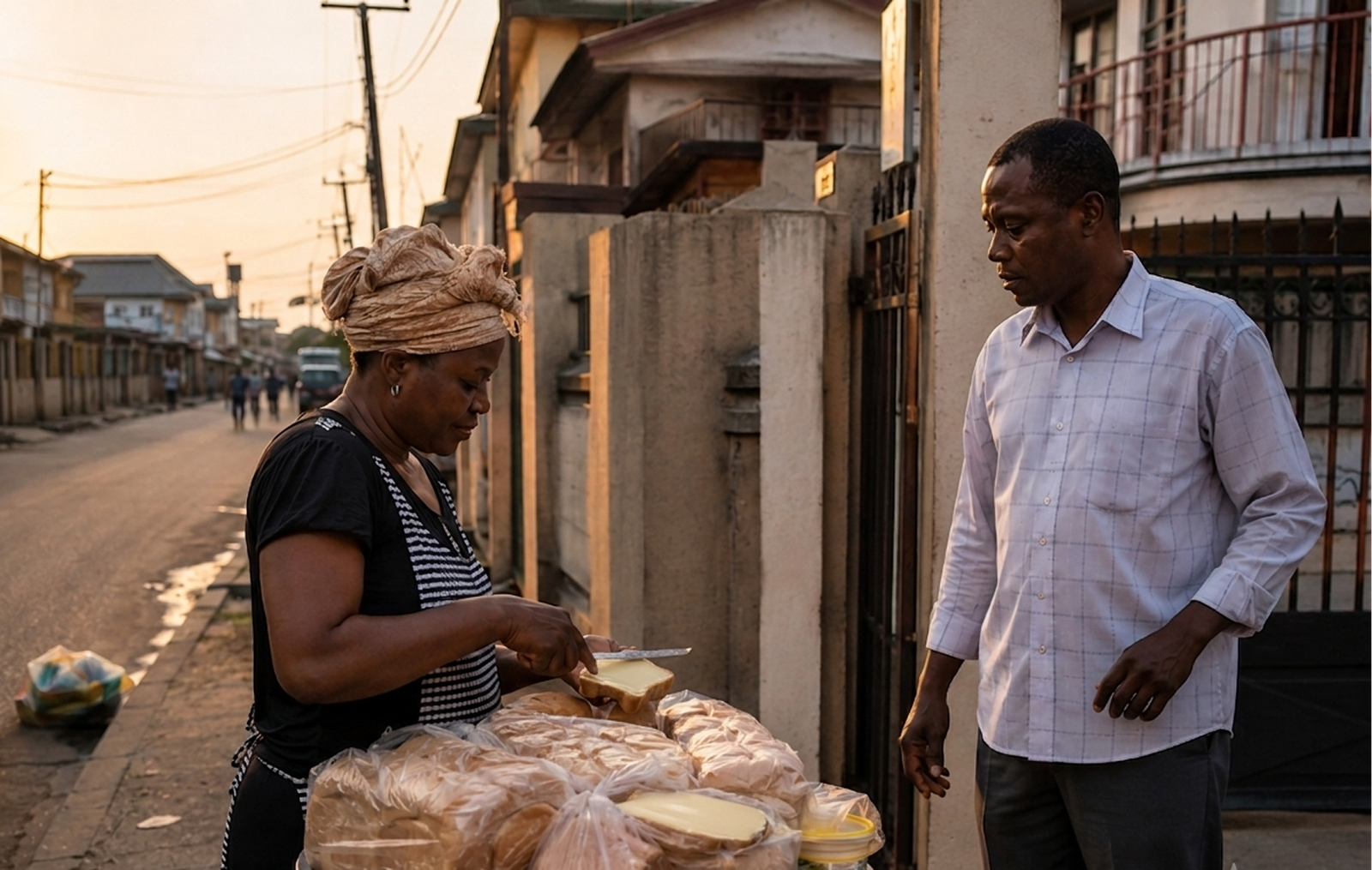
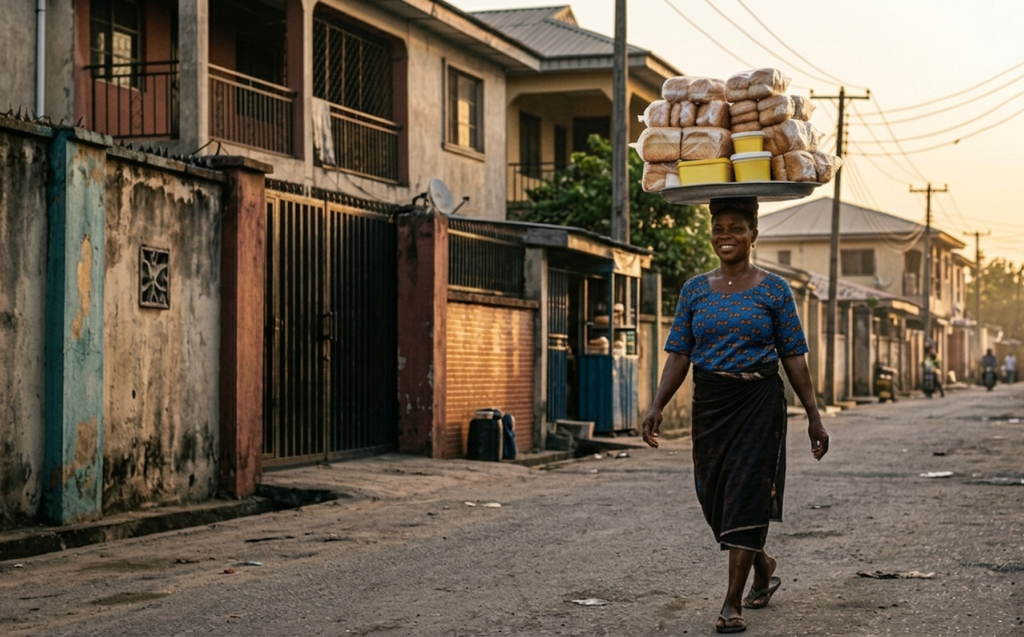
She balanced a tray of freshly baked bread on her head, a tub of margarine tucked neatly beside the loaves. Everything was covered with a sheet of clear plastic, protection against the unpredictable Lagos rain. The tray seemed impossibly heavy, yet she carried it with effortless grace.
For many workers rushing out at the crack of dawn to beat the notorious morning traffic, she was a lifesaver. There was no time to prepare breakfast at home. A loaf of bread, sliced and generously spread with margarine, wrapped neatly in a nylon bag, was enough to begin the day.
She walked with the ease of a gymnast and the confidence of someone who knew every street by heart.
‘Onibredi!’
The shout would come from a balcony, a gate, or an upstairs window.
Without missing a step, she would lower her tray, pull out a loaf, slice it with practiced precision, slather on the margarine, and package it in seconds. Then, with a quick smile and a word of thanks, she would hoist the tray once more and continue her journey through estates, streets, and entire neighbourhoods.
In another part of Lagos, a different melody drifted through the morning air.
‘E kaaro! Ologi de o!’
The woman selling fermented corn pap announced her arrival with a voice as familiar as the morning call to prayer. Her customers emerged carrying bowls and small cups. The ogi, packed in tiny nylon sachets, would be paired with freshly fried akara. Golden, crisp, and fragrant. It was a breakfast as old as the city itself.
Then there was the unmistakable cry:
‘Elewa Aganyin ‘
Aganyin beans.
Spoken in the rich accents of the riverine people who had brought their culinary traditions to Lagos.
The secret lay in the sauce.
Nobody quite knew how they made it. Dark, smoky, and rich with flavour, it sat atop soft beans like a crown. There was always a generous pool of palm oil glistening in the morning sun, pieces of dried fish hidden beneath, and spices blended according to recipes passed from one generation to another. Office workers, bus conductors, market women, and students all lined up for a taste.
Across Lagos, the voices of food hawkers rose with the dawn like rays of sunlight spreading across the city.
‘Moin moin elewe
Moimoi wrapped in leaves
‘Akara gbigbona ti de o’.
Hot akara has arrived.
‘Dundun onisu’
Fried sweet yam
Their voices created a symphony that only belonged to Lagos. Before smartphones, before delivery apps, before online orders and digital payments, these women were the original logistics network of Lagos.
They brought breakfast to our doorsteps.
They knew every street, every shortcut, every compound. They knew who preferred extra pepper, who bought on credit, and which family needed an extra helping because payday was still a few days away.
The streets were safer then, or perhaps they simply felt safer. The women walked alone before sunrise and returned home long after the morning rush. There was little fear of abduction or harassment. Children ran errands without anxiety. Neighbours knew one another. Gates remained open longer. Trust was woven into the fabric of daily life.
These women were more than hawkers. They were part of the heartbeat of the community.
Rain or shine, they showed up.
They walked miles carrying loads that would challenge younger, stronger people. They raised children from the proceeds of those trays. They paid school fees, built homes, supported relatives, and kept countless families fed.
Today, many of those voices have faded into memory. The streets are busier, noisier, and somehow quieter at the same time. The songs of the hawkers have been drowned out by engines, generators, and the constant buzz of modern life.
Yet every now and then, on a quiet morning, I think I hear them again.
‘Fine bread… Fine fresh bread…’
And for a brief moment, I am transported back to Lagos.
Those voices were more than advertisements. They were sounds of survival, resilience and a community. They were the sound track of a city waking up..
About Us
Write Affairsu00a0was created in June 2024 as an extension ofu00a0Quintessential Strategies Limited (QSL) to meet the growing demand for expert writing services.
Well done 👏. Interesting. Good old days in Lagos. You could buy cooked beans as late as 12:00 midnight in Ita Faaji. Iya elewa cooks it till dawn. There was no fear of kidnappers or armed robbers then. “Dundu elepo” was a delicacy then. “Ewa aganyin” was sold by Togolese then. They settled in Obalende. They specialized in it. They never had equals in those days.. May God bring back the good old days.
This is brilliant Pat. You captured beautifully the true essence of life as it was then. It’s like I can hear the callings of the hawkers as they advertise their products. The streets felt safer then and there was a great sense of caring and trust as well.